Post-Merger Technology Debt: The Silent Destroyer of Synergy Value
Technology debt destroys 40% of projected M&A synergy value within 18 months. Learn why integration planning must start at Day minus 60, not Day 1.
The deal closes. The champagne flows. Six months later, the CTO delivers a presentation explaining why the projected £4M in technology synergies will actually cost £6M to achieve. Nobody is surprised except the board.

What Is Post-Merger Technology Debt?
Post-merger technology debt is the accumulated cost of integrating, replacing, or maintaining overlapping technology systems after an acquisition completes. It includes duplicated licences, incompatible data formats, conflicting security postures, and the human cost of running parallel systems during transition. Bain & Company research shows that 40% of projected technology synergies fail to materialise within the original timeline due to underestimated integration complexity.
Why Does Technology Debt Destroy Synergy Value?
Because due diligence focuses on what systems exist, not on what it costs to merge them. A target company running Salesforce and the acquirer running HubSpot is not a "minor integration task." It is a 6-month data migration project with change management implications across both sales organisations.

The silent destroyers:
- Licence duplication. Two CRM platforms, two ERP systems, two project management tools. The combined licence cost often exceeds the target's standalone cost because enterprise pricing penalises complexity.
- Data incompatibility. Customer records in different formats. Financial data on different chart of accounts structures. Compliance evidence in incompatible document management systems.
- Security posture gaps. The acquirer has ISO 27001. The target has "we use strong passwords." Bringing the target up to standard is a 12-month programme, not a weekend task.
- Shadow IT exposure. The target's team uses 15 SaaS tools that never appeared in due diligence because nobody asked.
What Should Technology Due Diligence Actually Cover?
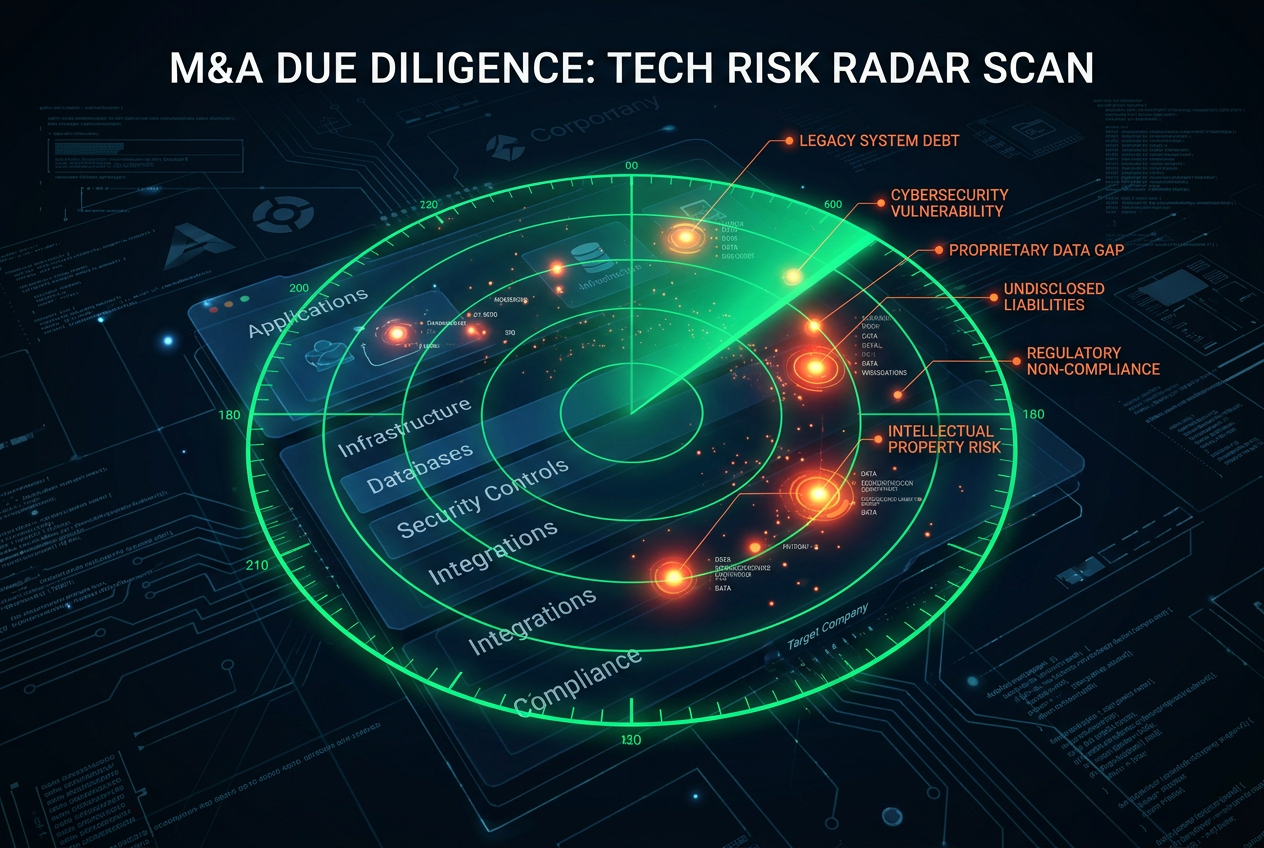
Proper technology due diligence must quantify:
- Total annual technology spend (including shadow IT)
- Integration complexity score (API availability, data portability, contract lock-in periods)
- Security maturity gap (mapped against acquirer's baseline)
- People dependency (single points of failure in technical teams)
- Decommissioning timeline and cost for redundant systems
If your due diligence report does not include these five items with pound figures attached, your synergy projections are fiction.
How Does This Affect the Integration Business Case?
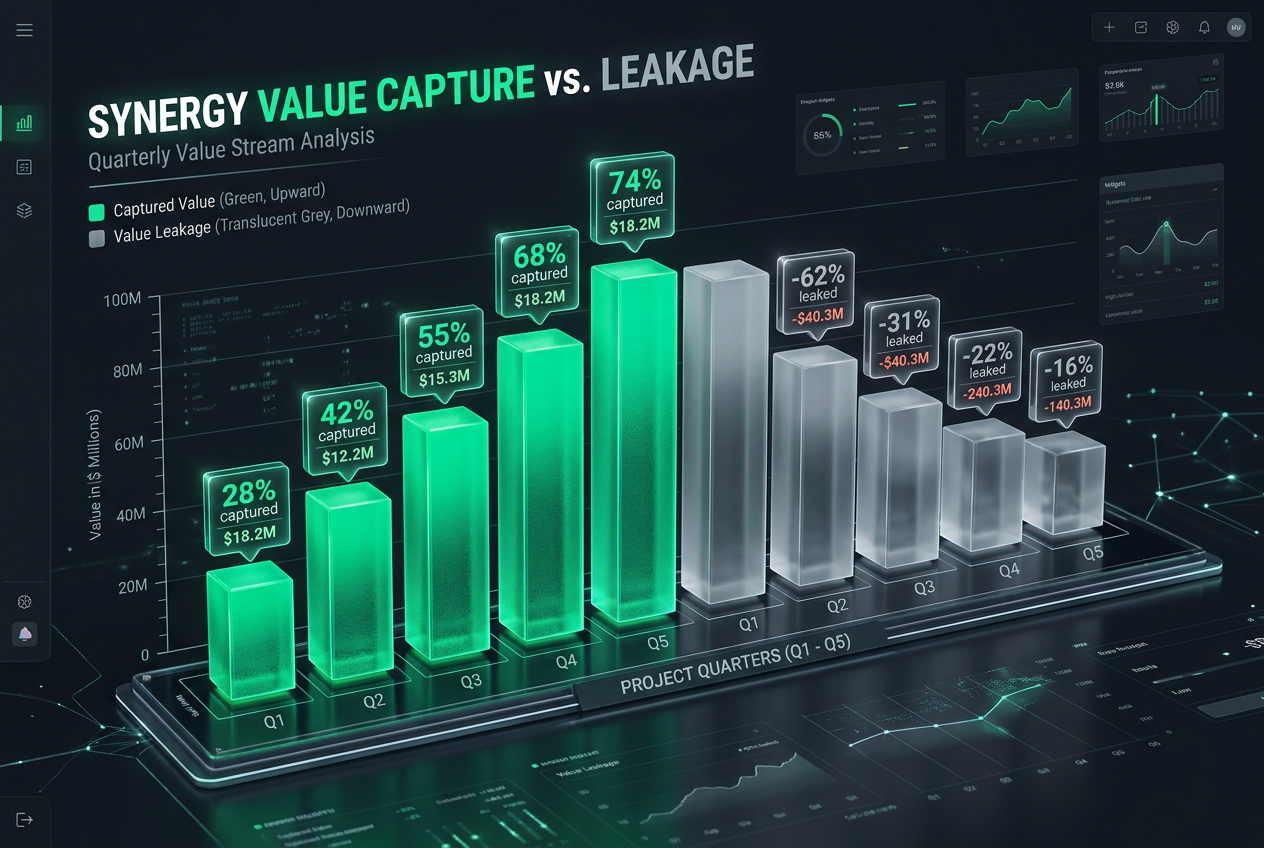
A typical mid-market acquisition with £3M projected annual synergies will lose:
- £400K to licence overlap during transition (12-18 months of dual running)
- £300K to data migration and cleansing
- £200K to security remediation
- £150K to change management and retraining
- £100K to extended project management overhead
That is £1.15M, or 38% of projected synergy value, consumed before any benefit is realised. The deal still works, but the timeline to positive ROI shifts by 9-14 months.
How Does Simplif-i Solve Post-Merger Technology Debt?
Simplif-i's M&A module provides a single integration command centre from Day minus 60. Technology inventory, licence tracking, security gap analysis, and integration milestone management all live in one platform. The system flags dependency risks, tracks decommissioning progress, and reports synergy capture against the original business case in real time.
At £149/month for Founding Members, it pays for itself the moment it prevents one month of unnecessary dual-running on a single SaaS licence.
Frequently Asked Questions
When should technology integration planning start? Day minus 60 at minimum. Ideally during due diligence, with a dedicated technology workstream.
How do you quantify technology debt before completion? Request the target's full technology spend, licence inventory, and architecture documentation during data room access.
What is the biggest risk to synergy realisation? People dependency. Key technical staff leaving post-acquisition can delay integration by 6-12 months.
Can Simplif-i track integration progress against synergy targets? Yes. The M&A dashboard maps every integration milestone to its synergy value contribution.
Does this work for serial acquirers? Absolutely. The platform maintains a library of integration playbooks that accelerate each subsequent deal.
Compliance, simplif-i'd.
✨ Recommended For You
M&A Integration Planning for UK SMEs: The Operational Playbook That Stops Value Erosion
70% of M&A value is lost in integration. This operational playbook for UK SMEs explains how to stop value erosion using connected platforms instead of spreadsheets.
Integration Velocity: Why Your Deal Success Depends on Day 0 Automation
M&A deals fail in the integration phase. Discover how Day 0 automation secures deal value and accelerates operational synergy for UK firms.
Post-Merger Integration Planning Guide
How to plan and execute successful post-deal integration that captures intended value.