The M&A integration software market in 2026 is crowded with tools that solve the wrong problem. Most of them are project management platforms adapted for deal execution: they track workstreams, manage timelines, assign tasks, and generate status reports. They are Gantt charts with an M&A skin.
That is not integration management. That is task management. And the difference matters, because most post-merger integrations fail not because tasks were missed but because governance, risk, and entity management were not addressed systematically. The integration team completed 94% of their task list, filed the project as "successfully delivered," and left behind a governance structure that was fundamentally broken.
I have audited enough post-merger integrations to know what actually needs managing. It is not tasks. It is the structural transformation of governance, risk, compliance, entity management, and contractual obligations from two separate organisations into one coherent framework. Here is what that requires.
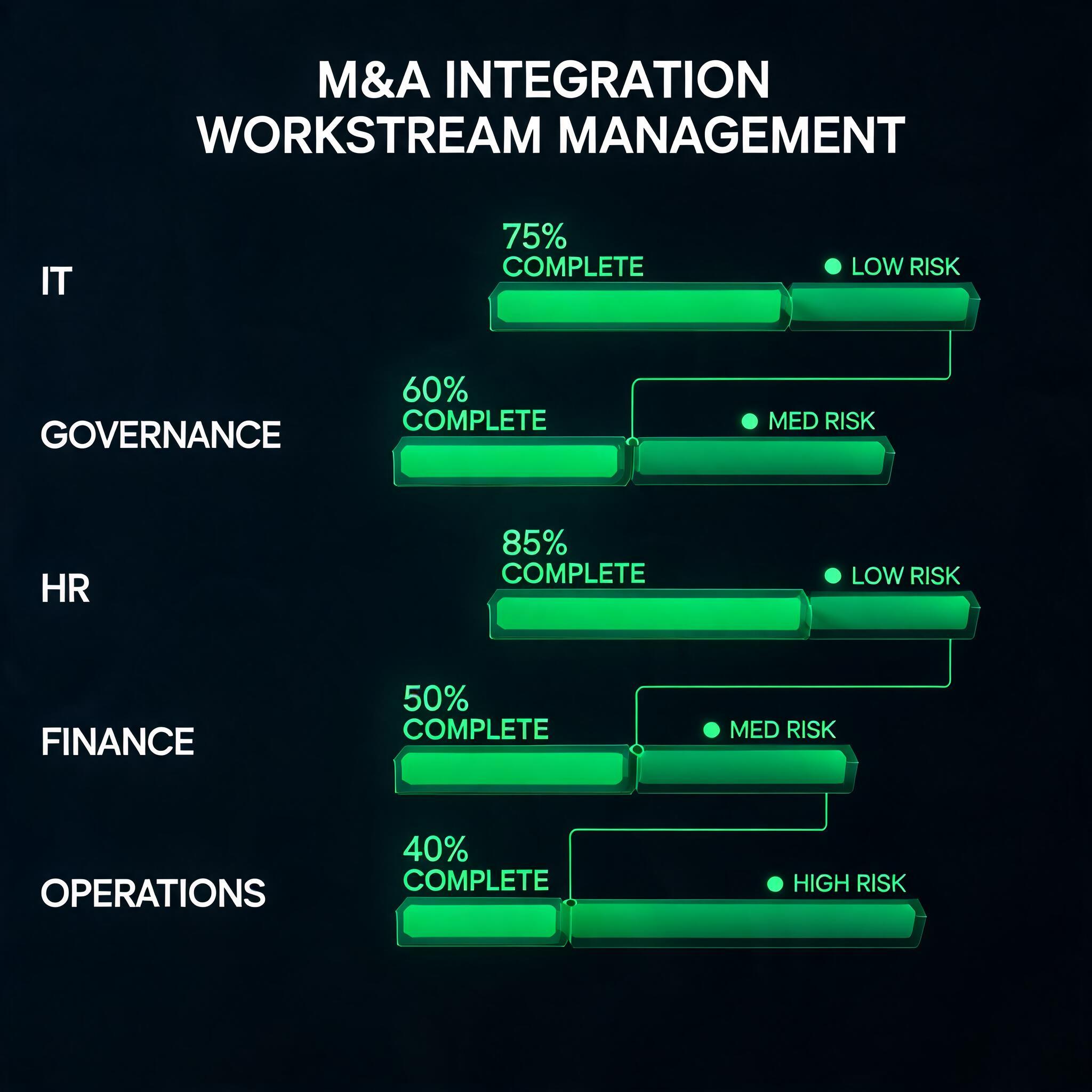
The typical M&A integration platform offers:
Products like DealRoom, Midaxo, and Deloitte's M&A integration tools provide these capabilities competently. The problem is not that they do these things badly. The problem is that they do not do enough.
An M&A integration is not a project. It is a governance transformation. And the dimensions that matter most for long-term success are the ones that project management tools are not designed to handle.
Every acquisition brings entities. Sometimes one. Sometimes 30. Each entity needs to be absorbed into the acquiring group's governance framework. This means:
No mainstream M&A integration tool manages entity governance onboarding. They track "legal workstream tasks" but have no entity data model, no statutory deadline engine, and no filing capability. The company secretary manages this in their own system (or spreadsheet) while the integration tool shows the legal workstream as "on track" based on task completion percentage.
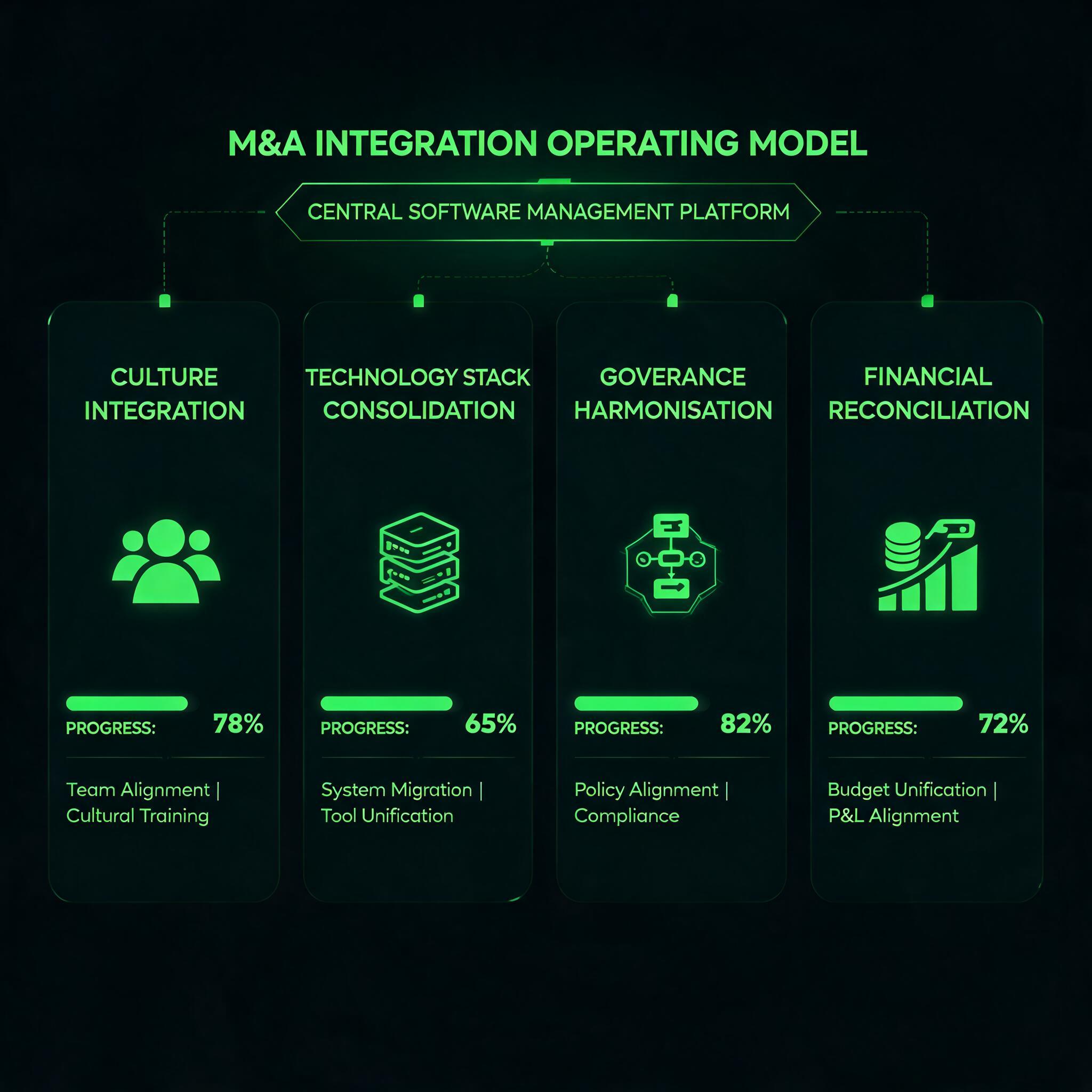
The target company's contracts need to be reviewed, risk-classified, and absorbed into the acquiring group's contract management framework. Specific activities include:
M&A integration tools do not manage contracts. They might have a task that says "review target contracts" but they have no contract data model, no risk classification engine, and no obligation tracking capability. The actual contract review happens in a separate system (or in email), and the results may or may not be captured anywhere systematic.
The target company arrives with its own risk profile. The acquiring company has its own risk register. Post-completion, these need to be consolidated. This means:
M&A integration tools typically have a "risk and issues" log for the integration project itself. This is not the same as enterprise risk register consolidation. The integration risk log tracks risks to the integration timeline (for example, "IT migration delayed by two weeks"). It does not track the enterprise risks inherited from the acquisition (for example, "target has a material litigation exposure that is now on our balance sheet").
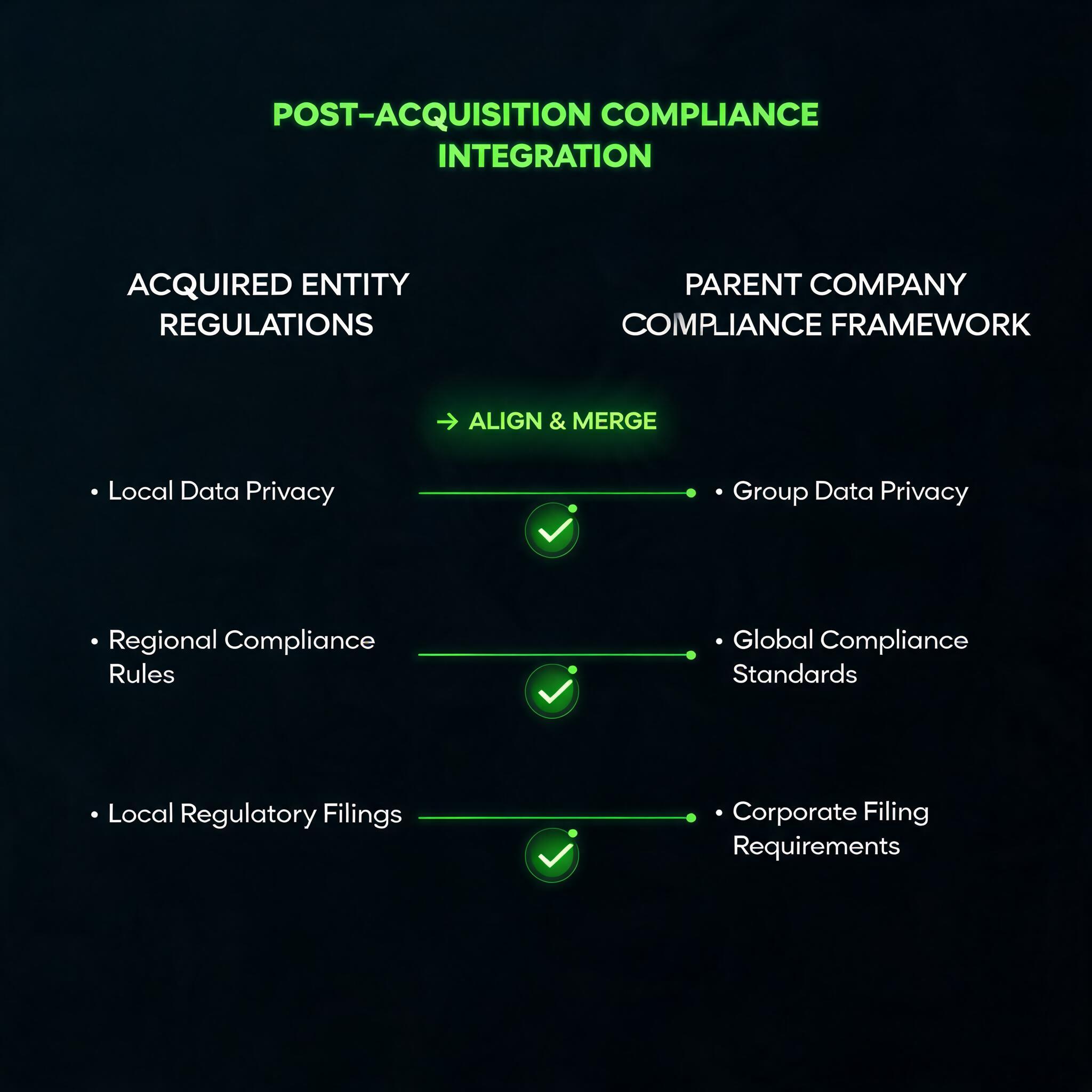
The target may operate under different regulatory frameworks, different compliance standards, and different policy sets. Post-completion, the group needs a unified compliance framework. This requires:
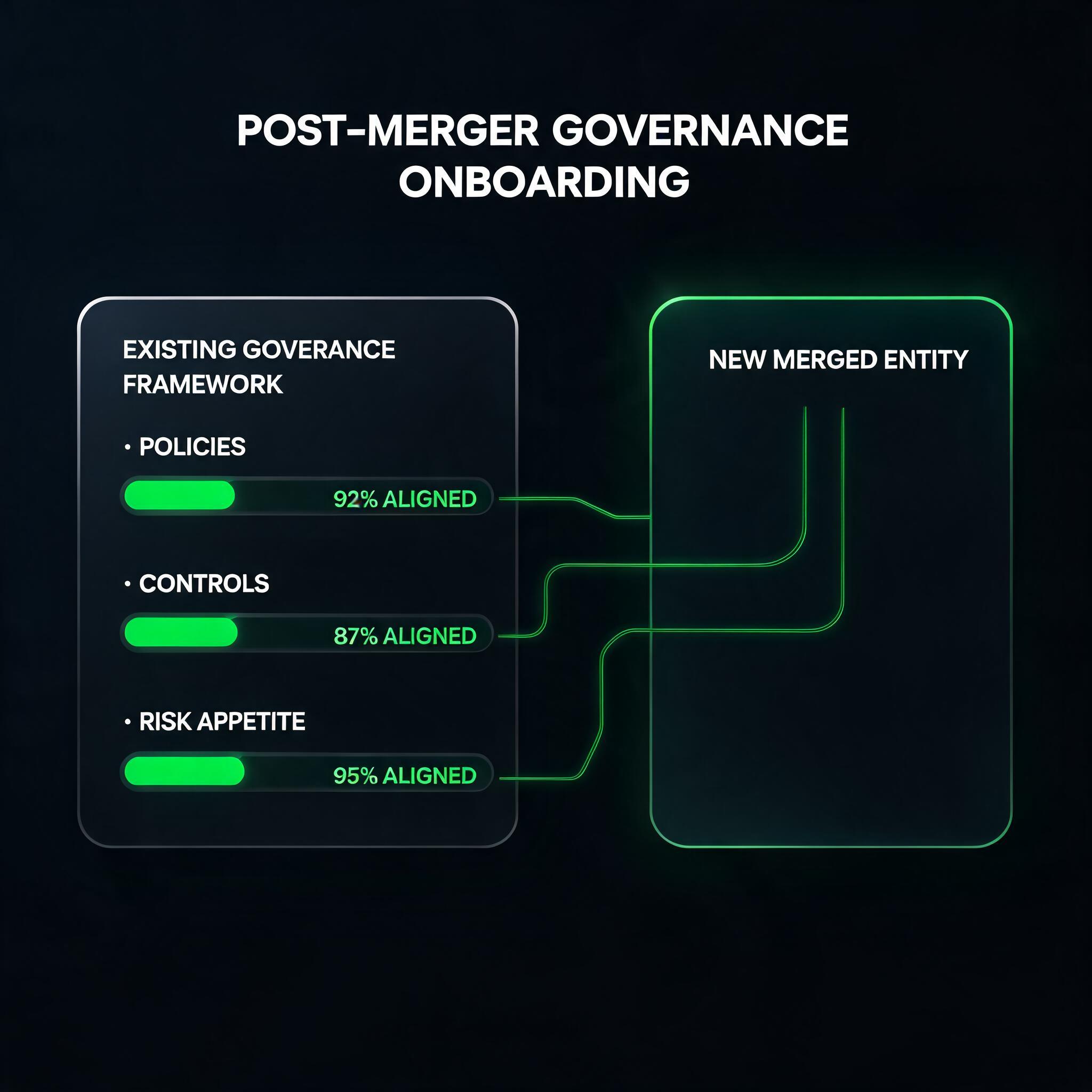
The combined group may need a new governance structure: new board composition, new committee structures, new delegated authority frameworks, new reporting lines. This is not a project task. It is a design exercise that affects every aspect of how the combined organisation is directed and controlled.
Integration software should support governance structure modelling: the ability to design and test different governance configurations before implementing them. How many board seats? Which committees? What delegated authority levels? Where do the new entities sit in the governance hierarchy? These decisions need to be made with visibility of the full entity structure and risk profile, not in isolation.
As integration progresses, events occur that generate new risks: a key person departs, a critical system migration is delayed, a regulatory filing deadline is missed, a customer contract is terminated. Each of these events should automatically generate or update a risk entry in the enterprise risk register.
In most integrations, these risks are captured (if at all) in the integration project's risk log, which is a separate document from the enterprise risk register. The board sees the enterprise risk report and the integration status report as separate documents, with no systematic connection between them. Automated Risk Injection closes this gap by ensuring that integration events flow directly into the enterprise risk framework.
The deal thesis sets expectations for synergy realisation, risk reduction, and capability enhancement. Due diligence validates (or challenges) these expectations with evidence. Integration is supposed to deliver against them.
Real integration management tracks value realisation against the due diligence baseline, not just against the deal model. If due diligence identified £2M of annual savings from supplier consolidation, the integration tool should track the actual savings realised against that specific finding, with a clear audit trail from due diligence finding to integration action to financial outcome.
The platform architecture required for comprehensive M&A integration management combines five capabilities that are typically spread across separate tools:
When these five capabilities share a single data model, integration management becomes a governance discipline rather than a project management exercise. The entity data informs the risk register. The contract portfolio informs the compliance framework. The risk register informs the integration priorities. The board sees a single, connected picture of how the acquisition is being absorbed into the group.
M&A integration software should manage the structural transformation of governance, risk, compliance, and entity management from two organisations into one. If your integration tool only manages tasks and timelines, it is not integration software. It is a project plan with a premium price tag.
The organisations that realise full value from their acquisitions are the ones that treat integration as a governance transformation, not a project. They use a platform that connects entity management, contract management, risk management, compliance management, and programme management in a single architecture. That is what Simplif-i delivers.
Compliance, simplif-i'd.
--- Source: https://simplif-i.com/api/blog/readable/ma/ma-integration-software-what-should-it-manage Web Version: https://simplif-i.com/blog/ma/ma-integration-software-what-should-it-manage © Simplif-i - Unified Business Management Platform