I have reviewed governance frameworks for over 40 post-merger integrations. The same failure pattern appears in almost every one: the due diligence team produces a comprehensive report, the deal closes, the integration team starts work, and the due diligence report sits in a virtual data room that nobody opens again.
The findings from due diligence (risks identified, compliance gaps discovered, contractual obligations mapped, governance weaknesses flagged) are not transferred into the integration plan. The integration team builds their workstreams from scratch, based on a management presentation and a few conversations with the target's leadership. The detailed, evidence-based analysis that the acquirer paid six figures for is abandoned at completion.
This is not a process failure. It is an architecture failure. Due diligence and post-merger integration use different tools, different teams, and different frameworks. The handover between them is, in most organisations, a PDF report and a meeting. That is not a handover. It is a hope.
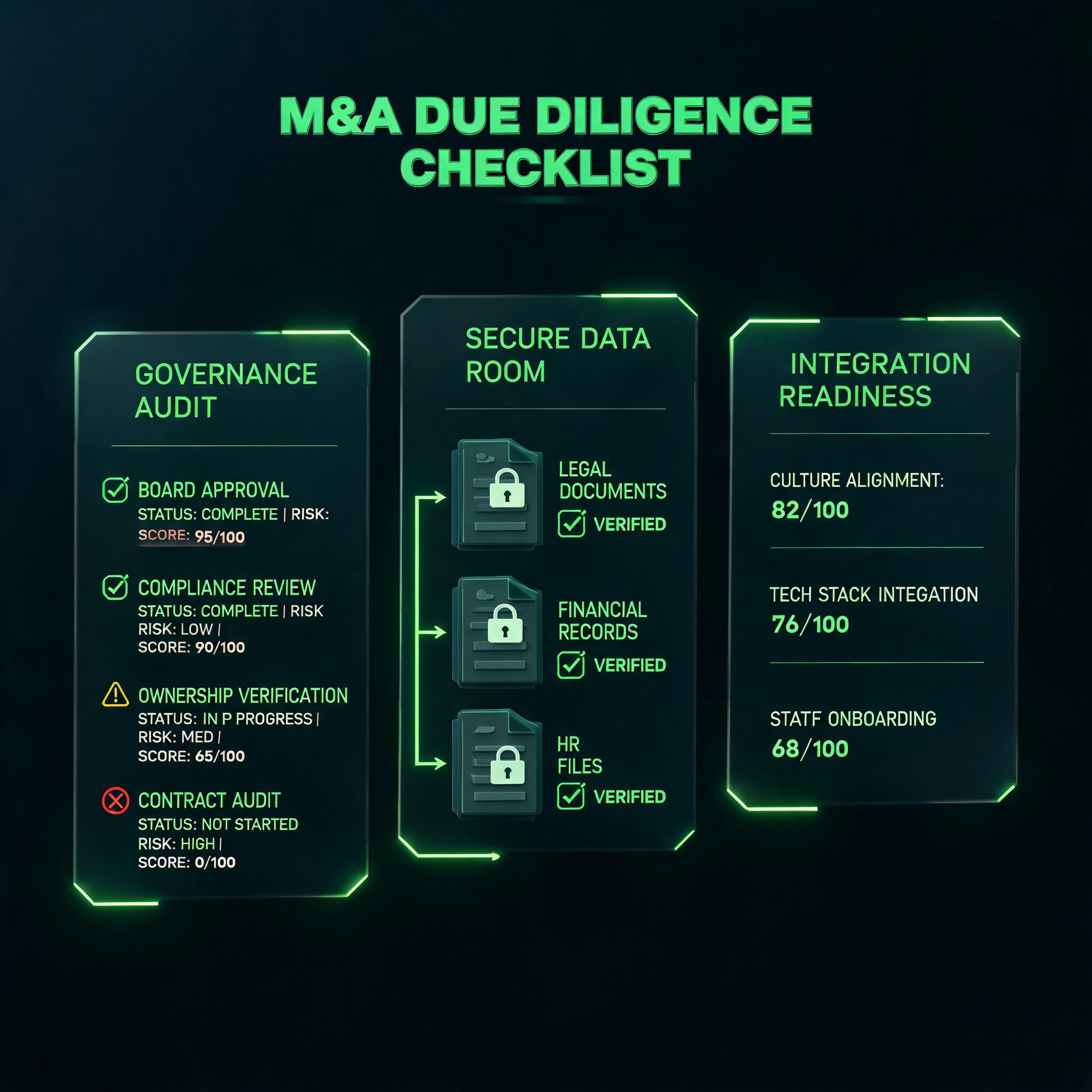
A thorough governance-focused due diligence exercise produces structured outputs across multiple dimensions:
Entity structure analysis: The target's corporate tree, including all subsidiaries, dormant entities, joint ventures, and overseas registrations. Each entity's compliance status, filing history, officer appointments, and registered office details. For acquisitive targets, this can involve 20 to 50 entities with varying levels of governance maturity.
Contract portfolio assessment: Material contracts identified and risk-classified. Change of control provisions flagged. Consent requirements mapped. Problematic clauses (uncapped indemnities, restrictive covenants, exclusivity arrangements) documented. Renewal dates and termination triggers noted.
Compliance gap analysis: The target's compliance posture assessed against the acquirer's standards and applicable regulatory frameworks. Gaps identified, remediation costs estimated, and timeline implications documented.
Risk register: An initial risk assessment of the target, structured around categories that align (ideally) with the acquirer's enterprise risk framework. Material risks quantified where possible, with estimated likelihood and financial impact.
People and governance assessment: Board composition, key person dependencies, employment contract terms for senior leadership, retention risk analysis, and governance practice assessment (board effectiveness, committee structures, delegated authority frameworks).
This is high-quality, expensive intelligence. It represents thousands of hours of professional work. And in most acquisitions, its useful life ends on the day the deal completes.
The handover from due diligence to post-merger integration fails for four structural reasons:
Due diligence outputs are documents: reports, spreadsheets, memoranda. Integration planning requires actionable data: task lists, dependency maps, risk entries, milestone schedules. Converting a 200-page due diligence report into a structured integration plan requires someone to read the entire report, extract the actionable items, classify them by workstream, prioritise them by urgency, and enter them into the integration management tool. This translation exercise rarely happens comprehensively because the integration team is under pressure to deliver quick wins and does not have the bandwidth to parse legal documents.
The due diligence team (external advisers, internal M&A team, subject matter experts drafted for the review) disbands at completion. The integration team (typically an integration manager, workstream leads, and operational staff from the acquiring business) assembles post-completion. There is minimal overlap between these two teams. The institutional knowledge captured during due diligence walks out the door when the advisers submit their final invoices.
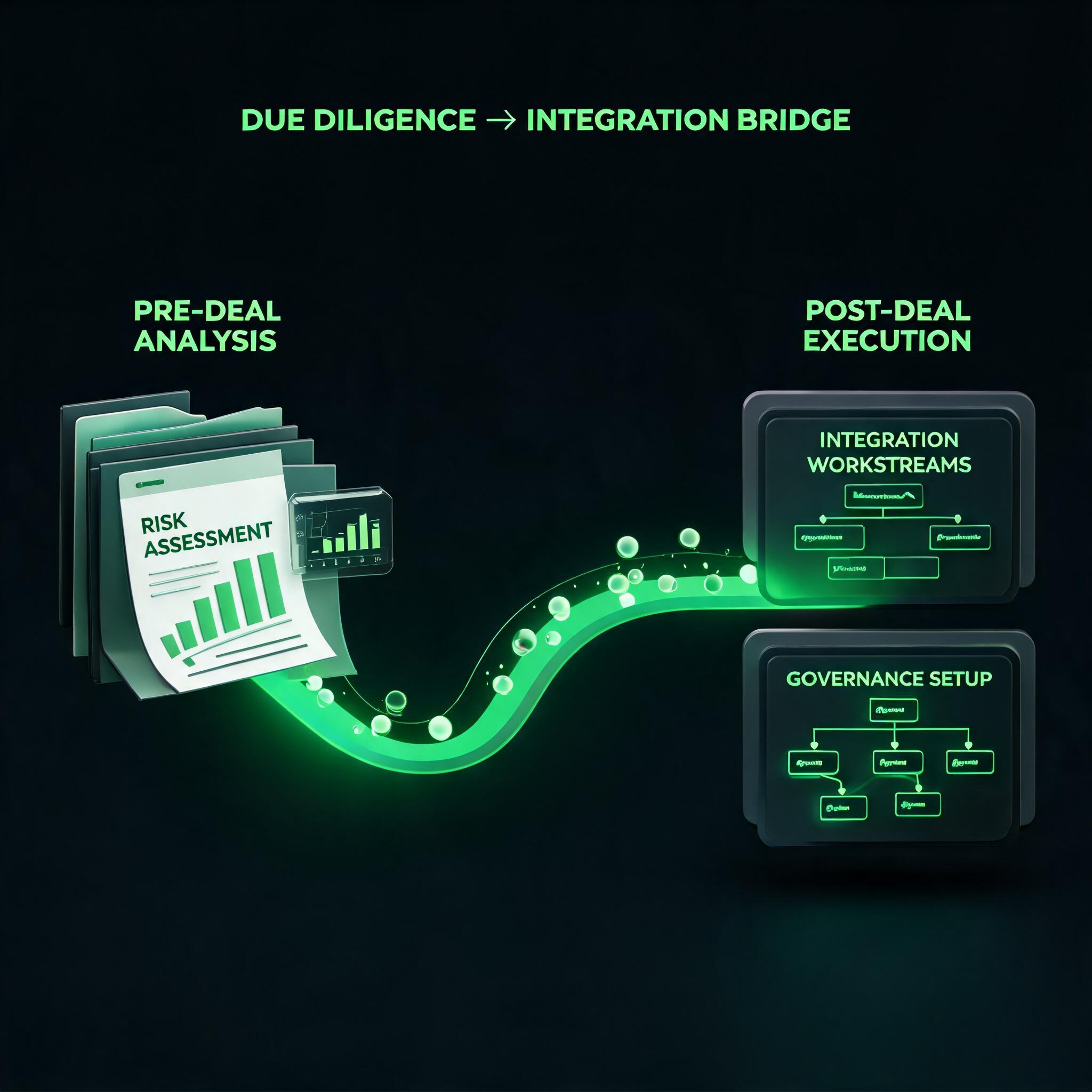
Due diligence is conducted in a virtual data room (Datasite, Intralinks, or similar). Integration is managed in a project management tool (Microsoft Project, Asana, Monday.com) or, more commonly, in a spreadsheet. The acquiring company's GRC platform is a third system that receives neither the due diligence findings nor the integration progress updates. Three systems, zero integration, and a governance gap that persists until the post-merger audit (if one ever happens).
Due diligence findings are presented to the deal committee. Integration milestones are reported to the integration steering committee. These are often different groups with different agendas. The deal committee wants the deal to close. The integration committee wants the integration to succeed. Neither group owns the space between: ensuring that what was discovered during due diligence is actually addressed during integration.
Research consistently shows that 50% to 70% of M&A transactions fail to deliver their expected value. While there are many contributing factors, the due diligence-to-integration disconnect is one of the most preventable. Specific failure modes I have observed:
Inherited risk not registered: Due diligence identified a material litigation risk in the target. The acquirer's risk register was never updated. The litigation settled 18 months post-completion for £3.2M, which was within the range estimated during due diligence but came as a surprise to the acquiring board because the risk was never formally captured.
Compliance gap not remediated: Due diligence identified that the target's data processing agreements did not meet GDPR requirements. The finding was in the report. The integration plan did not include a DPA remediation workstream. The ICO investigation 12 months later found the gaps exactly as documented in the due diligence report.
Change of control not managed: Due diligence flagged 14 contracts with change of control provisions requiring counterparty consent. The integration team was not informed. Three contracts were terminated by counterparties who were not notified of the change of ownership within the required timeframe. Revenue impact: £1.8M annually.
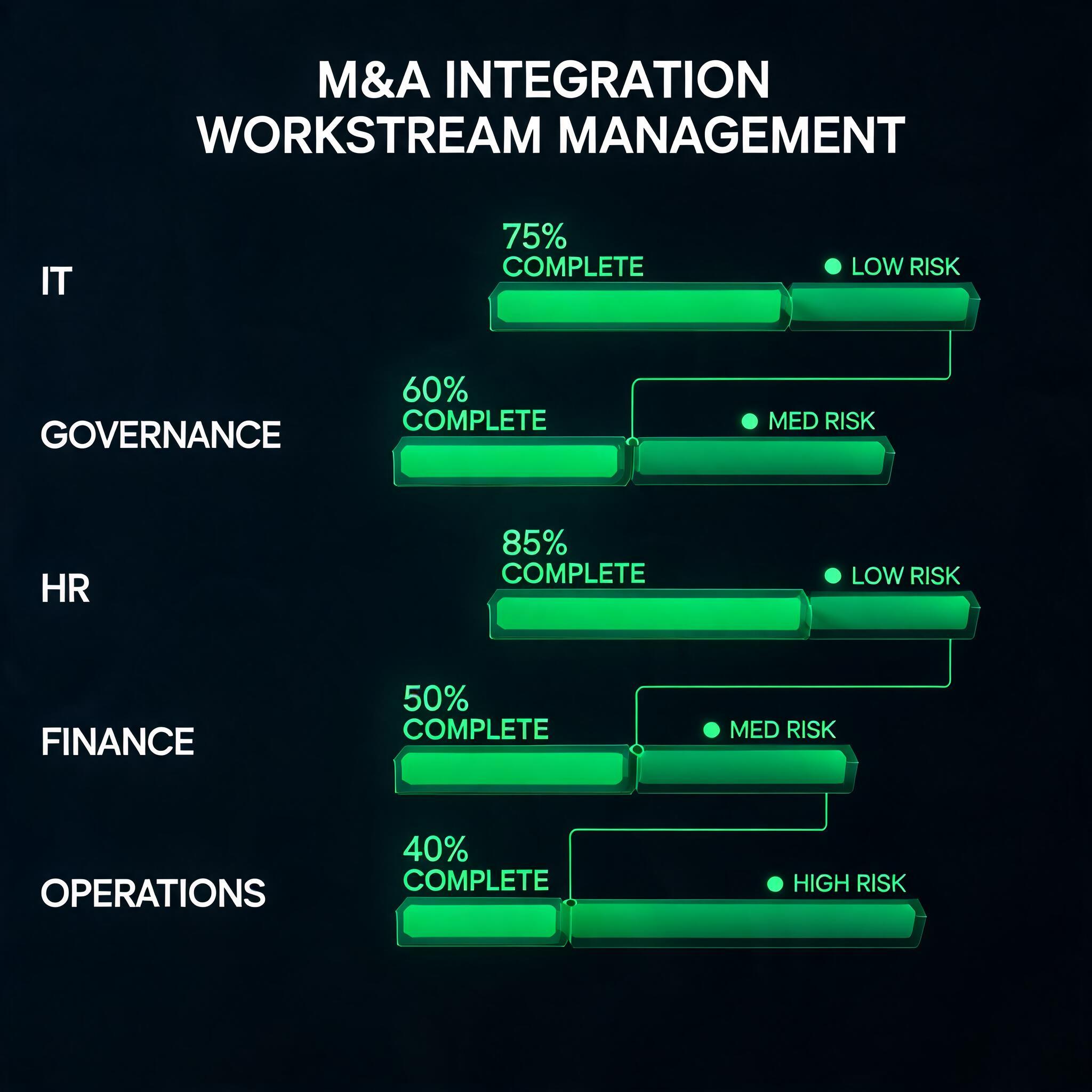
The solution is not a better handover meeting. It is a platform architecture that treats due diligence and post-merger integration as phases of a single workflow rather than separate projects with a document-based interface between them.
Due diligence findings are captured in a structured format from the start, not in documents but in data. Every entity discovered is entered into the entity register. Every material contract is logged with its risk-relevant attributes. Every compliance gap is recorded as a risk entry with a remediation requirement. Every governance finding is classified against the acquirer's governance framework.
This does not replace the narrative due diligence report. It supplements it with structured data that can be automatically processed by the integration planning engine.
When due diligence findings are structured data rather than document text, the system can automatically generate integration workstreams from them. Entity governance findings generate entity onboarding tasks. Contract change of control findings generate consent management tasks. Compliance gaps generate remediation workstreams with estimated timelines and resource requirements. Risk findings are injected into the enterprise risk register with pre-populated classifications and control requirements.
Risks identified during due diligence flow directly into the enterprise risk register through Automated Risk Injection. They are not re-entered manually. They are not translated. They retain their source linkage to the due diligence finding, so the integration team can trace any risk back to the evidence that identified it. As integration progresses and risks are mitigated, the risk entries are updated automatically based on integration milestone completion.
The board sees a single dashboard that combines due diligence findings, integration progress, and risk status. They can see how many due diligence findings have been addressed, which ones remain open, what the residual risk exposure is, and whether the integration is on track to deliver the expected value. This is not a quarterly integration report assembled from multiple sources. It is a live dashboard drawn from a single data model.
In a unified architecture, Day 1 readiness means:
This is achievable because the data flows through a single platform rather than being translated between three or four disconnected systems.
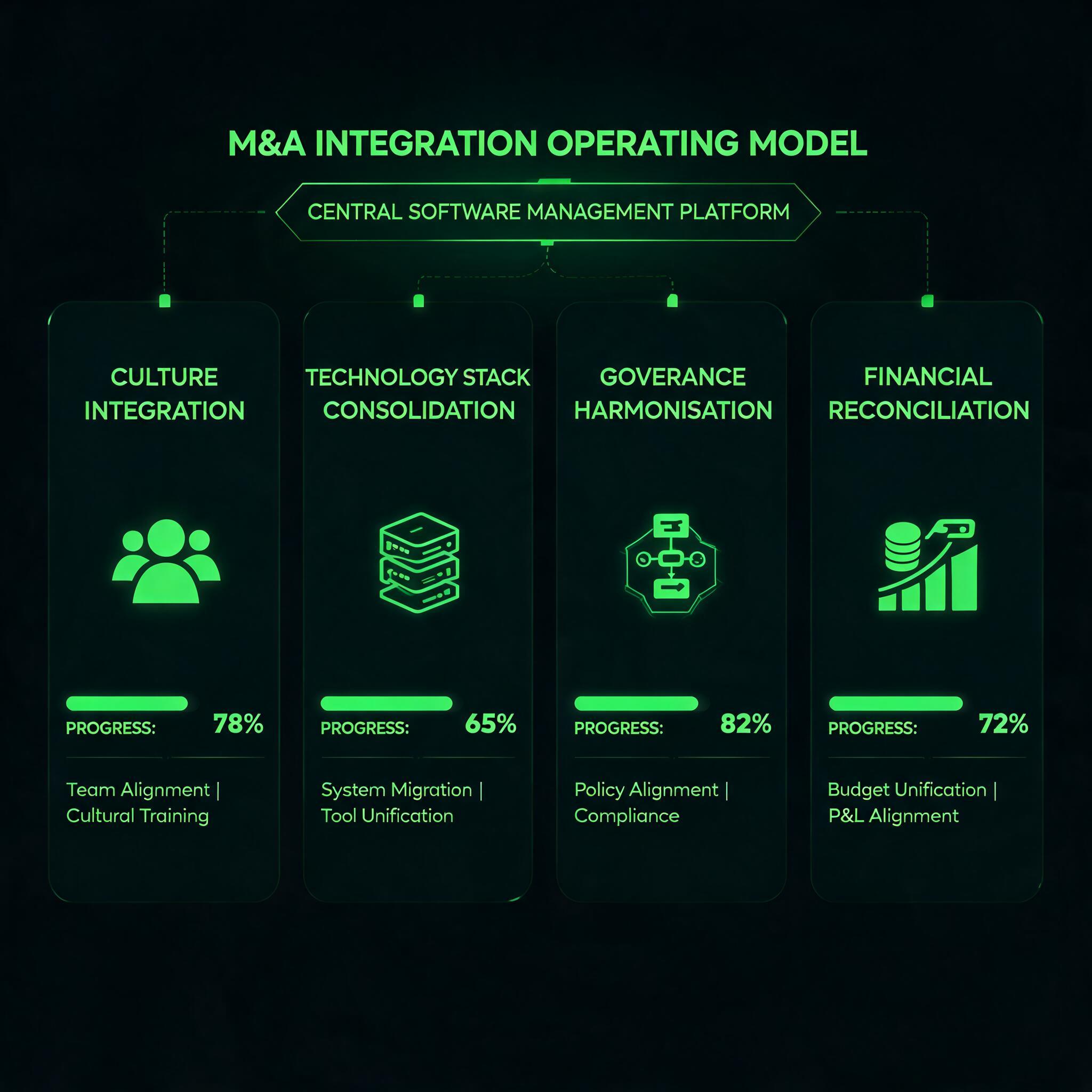
The M&A market in 2026 is characterised by two trends that make the due diligence-to-integration connection more critical than ever.
First, deal velocity is increasing. PE-backed acquirers are executing transactions faster, which compresses the time available for both due diligence and integration planning. If the handover between these phases involves manual translation of findings into integration tasks, the compression means more findings are lost in transition.
Second, regulatory expectations are rising. The FCA expects firms to demonstrate that acquisitions do not compromise operational resilience. The PRA expects insurance firms to maintain governance standards through acquisition events. The CMA is scrutinising post-merger integration practices as part of its competitive assessment framework. All of these require demonstrable traceability from due diligence finding to integration action to risk management outcome.
Due diligence and post-merger integration are not separate workstreams. They are sequential phases of a single governance process. Treating them as separate projects with a document-based handover between them destroys the value of the due diligence investment and creates governance blind spots that persist long after the integration is declared complete.
The architecture required is not complex, but it does require a platform that treats M&A as a governance discipline rather than a transaction event. Structured due diligence capture, automated integration plan generation, Automated Risk Injection from deal findings to the enterprise risk register, and unified board reporting.
That is what Simplif-i delivers. Not a due diligence tool. Not an integration tool. A governance operating system that connects what you discover to what you deliver, automatically and traceably.
Compliance, simplif-i'd.
--- Source: https://simplif-i.com/api/blog/readable/ma/ma-due-diligence-connects-post-merger-integration Web Version: https://simplif-i.com/blog/ma/ma-due-diligence-connects-post-merger-integration © Simplif-i - Unified Business Management Platform