# Technical Maturity Unveiled: 200+ APIs and 61 Database Collections
**Category:** GRC
**Author:** John Hotham
**Published:** 2026-05-27
**Read Time:** 7 min read
## Summary
Most SaaS platforms hide their architecture. Simplif-i publishes it. 200+ API endpoints. 61 database collections. Full OpenAPI documentation. 10/10 penetration test score. This is what technical integrity looks like when you have nothing to hide.
## Full Content
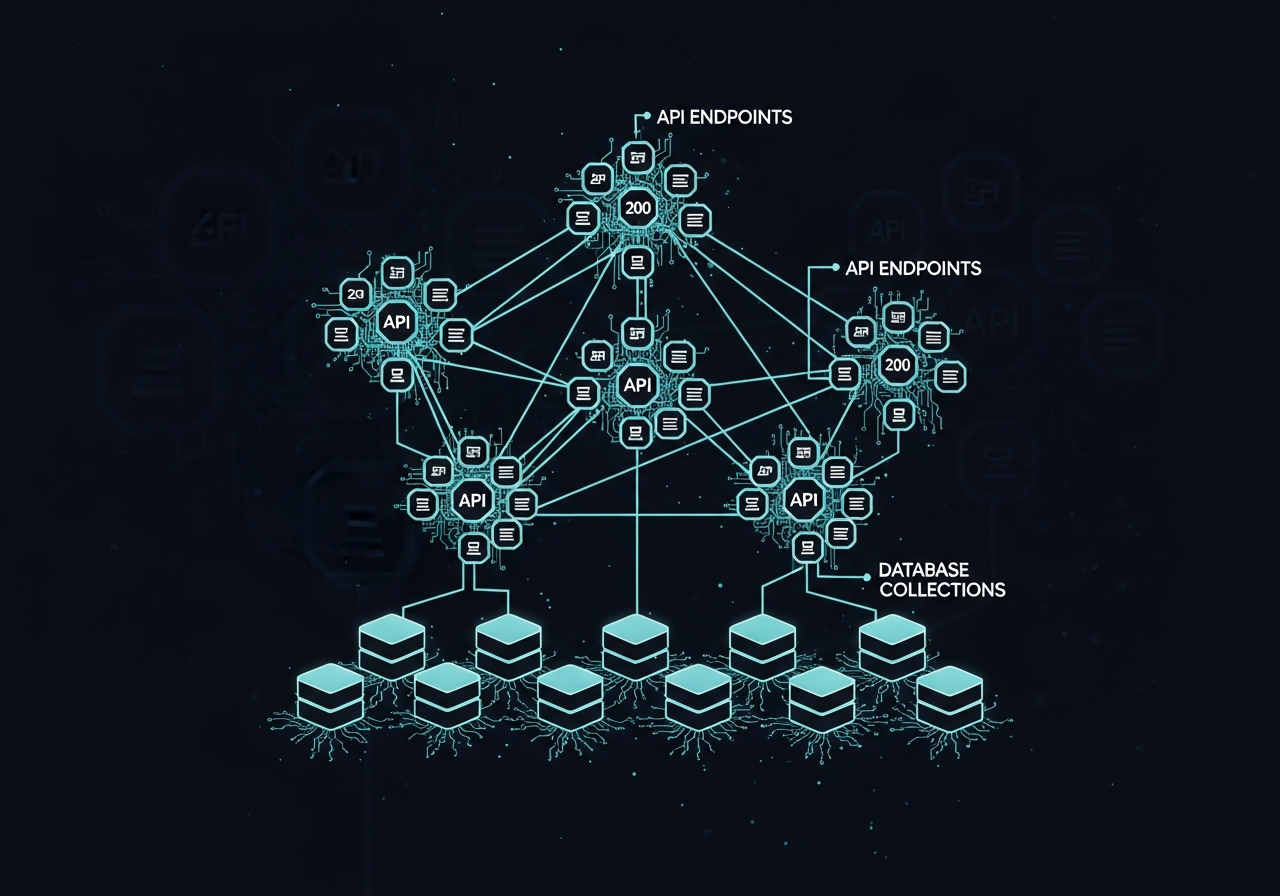
Most enterprise SaaS vendors will not tell you how their platform is built. They will show you a demo. They will give you a sales deck. They will talk about features. But ask them how many API endpoints they have, what their database architecture looks like, or when their last penetration test was — and you will get silence or deflection.
Simplif-i publishes this information. Not because we are obligated to. Because transparency is the point. If you are asking organisations to trust your platform with their governance, risk, compliance, contracts, and corporate structure — you should be willing to prove your own technical integrity.
This post is that proof.
## The Architecture in Numbers
| Metric | Value |
|---|---|
| Total API endpoints | 200+ |
| Database collections | 61 |
| Compliance frameworks supported | 30+ |
| Penetration test score | 10/10 |
| Implementation time | Zero (operational from Day 1) |
| Platform modules | 5 (GRC, PMO, Contracts, M&A, CoSec) |
| API documentation | Full OpenAPI 3.1 specification published |
| Authentication | Bearer token + External API keys with granular permissions |
| Rate limiting | Endpoint-specific, documented |
| Data architecture | MongoDB with collection-per-concern design |
## Why Does This Matter?
Because technical maturity is not a marketing claim. It is a measurable property. And most platforms in the GRC, PMO, and contracts space cannot demonstrate it because they were not built with this level of engineering discipline.
When you evaluate a platform, you should ask:
1. **Can I see your API documentation?** If the answer is no, the platform was not designed for integration, automation, or technical due diligence.
2. **How many endpoints do you expose?** A platform with 20 endpoints is a simple tool. A platform with 200+ endpoints is an operating system.
3. **What does your data model look like?** 61 collections means 61 distinct data concerns, each with its own schema, validation, and access control.
4. **When was your last penetration test?** And what was the score? A platform handling governance data that cannot prove its security posture is asking you to trust it on faith.
5. **Can I access your platform programmatically?** External API keys with granular permissions (read, create, update, publish, delete) mean the platform was designed for automation, not just human interaction.
## The 200+ API Endpoints: What They Cover
Simplif-i's API surface is not a bolt-on. It is the platform. The web application consumes the same APIs that external integrations use. There is no hidden internal layer. What you see in the documentation is what the platform uses.
Key API domains:
### Compliance & GRC (40+ endpoints)
- Framework management (CRUD, activation, article-level operations)
- Evidence management (upload, link, bulk import, freshness tracking)
- Risk register (create, assess, link to frameworks, interconnections)
- Compliance analytics (trends, snapshots, recalculation)
- Custom framework builder (draft, upload, extract, activate, community)
- Vulnerability scanning and control testing
### Project Management / PMO (30+ endpoints)
- Portfolio management with outcome tracking
- Resource allocation and capacity planning
- Milestone management with contract obligation linkage
- Board reporting and strategic alignment scoring
- Boston Matrix portfolio visualisation
### Contract Management (25+ endpoints)
- Full lifecycle management (create, negotiate, approve, sign, track)
- Obligation monitoring with breach detection
- Deep AI contract analysis (60-second full extraction)
- Renewal governance with budget cycle integration
- Financial impact tracking and P&L connection
### M&A (30+ endpoints)
- Deal pipeline and stage management
- Due diligence workflow with checklist automation
- Target company analysis and comparison middleware
- Delegated access for external advisers
- Integration milestone tracking with synergy measurement
- Post-deal governance continuity
### Company Secretarial (25+ endpoints)
- Entity management across group structures
- Officer and PSC register management
- Filing deadline tracking and Companies House integration
- Board pack generation and meeting management
- ECCTA identity verification workflow
### Platform Services (50+ endpoints)
- Authentication and session management
- Document analysis and AI routing
- Unified compliance calendar
- Cross-module workflows and approvals
- Dashboard and reporting aggregation
- External sync and content management
- Backlinks engine and SEO tooling
- Blog CMS with bot API and external publishing
## The 61 Database Collections: Architectural Integrity
Each collection represents a distinct data concern with its own:
- Schema validation
- Access control rules
- Indexing strategy
- Audit trail
- Cross-reference integrity
This is not a monolithic database with 300 columns in one table. It is a purpose-designed data architecture where every operational concern has its own storage, its own rules, and its own lifecycle.
Key collections span:
- Users, sessions, and permissions
- Frameworks, articles, and evidence
- Risks, controls, and assessments
- Projects, milestones, and outcomes
- Contracts, obligations, and renewals
- Entities, officers, and filings
- Deals, targets, and diligence items
- Workflows, approvals, and escalations
- Calendar events and compliance deadlines
- Documents, uploads, and AI analysis results
## Simplif-i vs. The Field: Technical Maturity Comparison
| Dimension | Simplif-i (Technical Maturity) | Enterprise GRC/PMO Vendors (The Field) |
|---|---|---|
| API documentation | Published. Full OpenAPI 3.1 spec available at /api/docs | Rarely published. Often requires sales engagement to discuss |
| API endpoint count | 200+ endpoints covering all modules | Typically 20-50 endpoints for basic CRUD. Deep operations unavailable |
| Database architecture | 61 purpose-designed collections with schema validation | Undisclosed. Typically monolithic with limited transparency |
| Penetration testing | 10/10 score. Report available | Claimed but rarely disclosed with scores |
| External API access | Granular permissions (read, create, update, publish, delete) | Limited or premium-tier feature |
| Bot/automation API | Dedicated bot endpoints with rate limiting and audit trail | Not offered or requires enterprise licensing |
| Implementation time | Zero. Operational from Day 1. No configuration project | Weeks to months. Professional services required |
| Data portability | Full API access to all data. No lock-in | Limited export. Often requires support request |
| Security posture | ISO 27001, SOC 2, GDPR compliant. Pen test verified | Claimed. Varying levels of evidence |
| Source of truth | API-first. Web app consumes same APIs as integrations | UI-first. APIs are secondary, often incomplete |
| Pricing transparency | Published. £149/month Founding Member. Modules from £49 | Enterprise quote. Opaque. Often 10-50x higher |
## What Technical Maturity Means for Your Organisation
### For the CTO/CIO
You can integrate Simplif-i into your technology estate using standard API patterns. No proprietary connectors. No middleware. No professional services engagement. Read the OpenAPI spec, generate client libraries, and integrate.
### For the CISO
A 10/10 penetration test score and published security architecture means you can conduct your own technical due diligence without relying on vendor claims. The attack surface is documented. The security controls are verifiable.
### For the COO
A platform with 200+ endpoints and 61 collections is not a tool. It is an operating system. It has the architectural depth to handle your governance, projects, contracts, deals, and corporate structure without hitting limitations that force you back to spreadsheets.
### For the CFO
£149/month for a platform with this level of technical maturity versus £50,000-£200,000/year for enterprise vendors with less transparency. The arithmetic is not subtle.
## The Transparency Commitment
Simplif-i publishes its:
- Full API documentation (Swagger UI at /api/docs)
- OpenAPI 3.1 specification (machine-readable at /api/openapi.json)
- Penetration test results
- Compliance framework coverage
- Architecture overview
We do this because governance platforms should practice what they preach. If we ask you to be transparent about your risks, your compliance, and your governance — we should be transparent about our platform.
Technical maturity is not a slide in a sales deck. It is a verifiable property. And we verify it publicly.
## The Bottom Line
A platform's technical maturity determines its ceiling. A tool with 20 endpoints will hit its limits within months. A platform with 200+ endpoints, 61 database collections, and full API documentation has the architectural headroom to grow with your organisation.
Most vendors hide their architecture because exposure creates accountability. Simplif-i exposes it because accountability is the product.
Founding Member pricing: **£149/month**. Full platform. 200+ APIs. 61 collections. Published, verifiable, transparent.
[Start your free trial at Simplif-i.com](https://simplif-i.com/signup) | [View API documentation](https://simplif-i.com/api/docs)
---
---
Source: https://simplif-i.com/api/blog/readable/grc/technical-maturity-unveiled-200-apis-61-database-collections-2026
Web Version: https://simplif-i.com/blog/grc/technical-maturity-unveiled-200-apis-61-database-collections-2026
© Simplif-i - Unified Business Management Platform